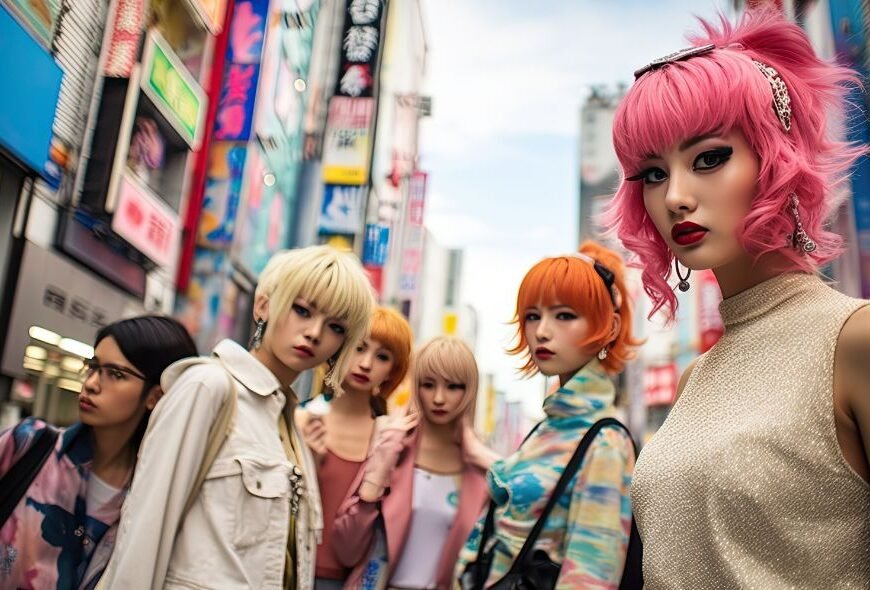
Harajuku fashion is a distinctive Japanese street style originating from Tokyo’s Harajuku district, characterized by bold layering, fearless color play, and unapologetic individuality. Step into Takeshita Street, and you’re surrounded by neon hair, pastel ruffles, punk chains, oversized bows, and DIY accessories all colliding in creative harmony. The style’s global popularity is rising fast: Harajuku–style search interest saw a 67% year-over-year growth recently.
Unlike fashion systems that impose rules, Harajuku celebrates rebellion and freedom. From Lolita elegance to Decora maximalism, it has grown from Tokyo’s backstreets to a cultural export influencing music videos, anime fashion, global streetwear, and high-end runways. Let’s dive into the origins, subcultures, icons, shopping spots, and worldwide influence of Harajuku and learn how to bring this Tokyo-born style into your own wardrobe.
What Is Harajuku Fashion?
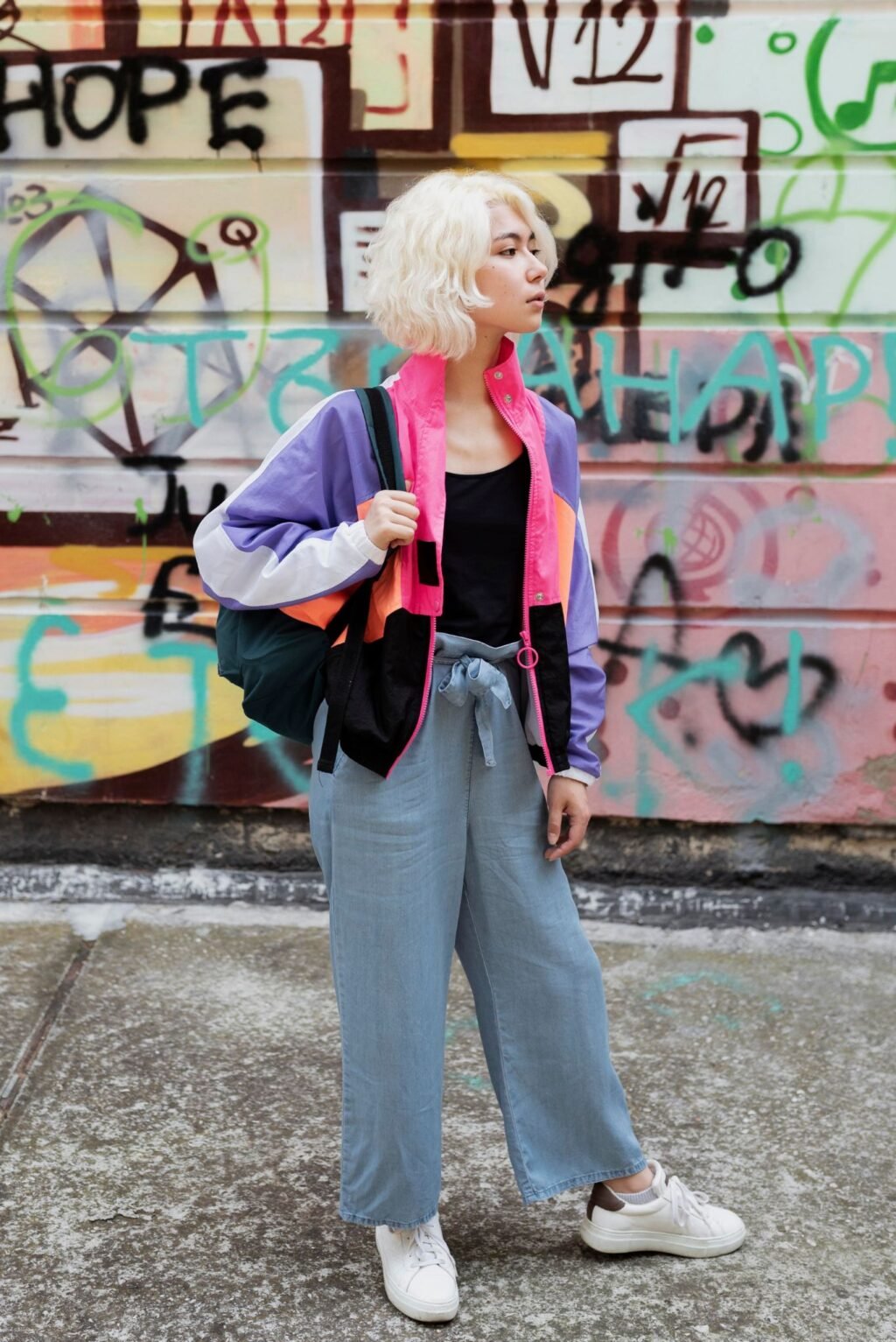
Harajuku fashion is a type of Japanese street fashion that originated in the Harajuku district of Tokyo, drawing inspiration from Western clothing and other fashions. At its heart, it is a safe space for limitless self-expression. It’s not about one specific look, but a blending of subcultural styles: doll-like Lolita dresses, Day-Glo Decora outfits, edgy punk jackets.
Harajuku does not follow seasonal trends, like Western fashion. Some wear thrifted clothes, while others opt for luxury brands; many create their own DIY accessories. What these two have in common is the courage of a kind that makes you stand out.
How Did Harajuku Fashion Start?
Harajuku fashion started in the late 1970s and early 1980s, when Tokyo’s young people rejected traditional cultural norms. Takeshita Street turned into a breeding ground for creativity and uniqueness. The ’90s saw the place gain a reputation as the hub of Japanese youth fashion with vintage boutiques, secondhand shops and indie designers.
The 2000s brought global recognition. Shoichi Aoki’s FRUiTS magazine, which documented street style and was an inspiration to fashion enthusiasts across the globe. Gwen Stefani made Harajuku mainstream in the western media, while it became a Japanese identity that musicians embraced.
Now, open and inventive Gen Z influencers, whether on TikTok borrowing from the current zeitgeist or ones imitating 90’s Harajuku charm, militia kawaii culture brings its playfulness to life in the movement.
What Makes Harajuku Fashion Unique?
Harajuku thrives on experimentation, such as:
- Blending cute with edgy.
- Mixing luxury labels with thrift-shop finds.
- Sporting outsize bows, pins, and stuffed animals held together with layers of jewelry.
The area is also intimately linked to Japanese pop culture, anime, manga, J-pop and cosplay have all left their mark on the fashion trends. It’s like walking through Harajuku, an art gallery with every single human being as a canvas for expression.
What Are the Main Styles of Harajuku Fashion?
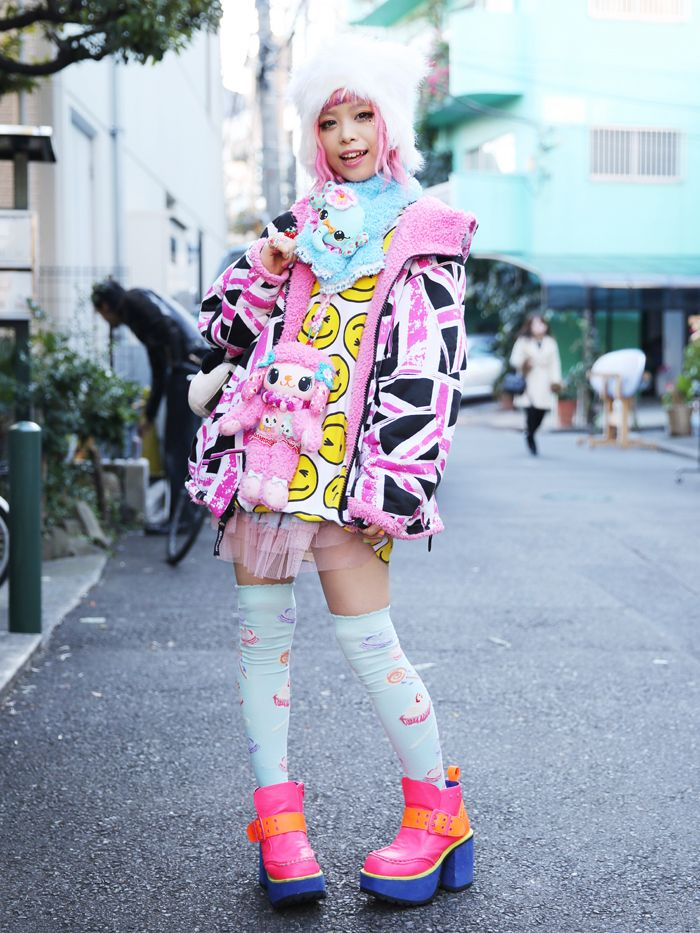
Harajuku isn’t really one look so much as a collection of fashion subcultures, each with its own rules and vibe:
Lolita Fashion
Influenced by Victorian and Rococo fashion, Lolita Fashion includes lace, bows, parasols, and petticoats. Sweet Lolita, Gothic Lolita and Classic Lolita substyles make it one of the most recognisable Harajuku aesthetics.
Decora
This is a maximalist style, characterized by layers of neon t-shirts, cartoon prints, and dozens of hair clips, bracelets, and stickers. The rule: more is never enough.
Kawaii Style
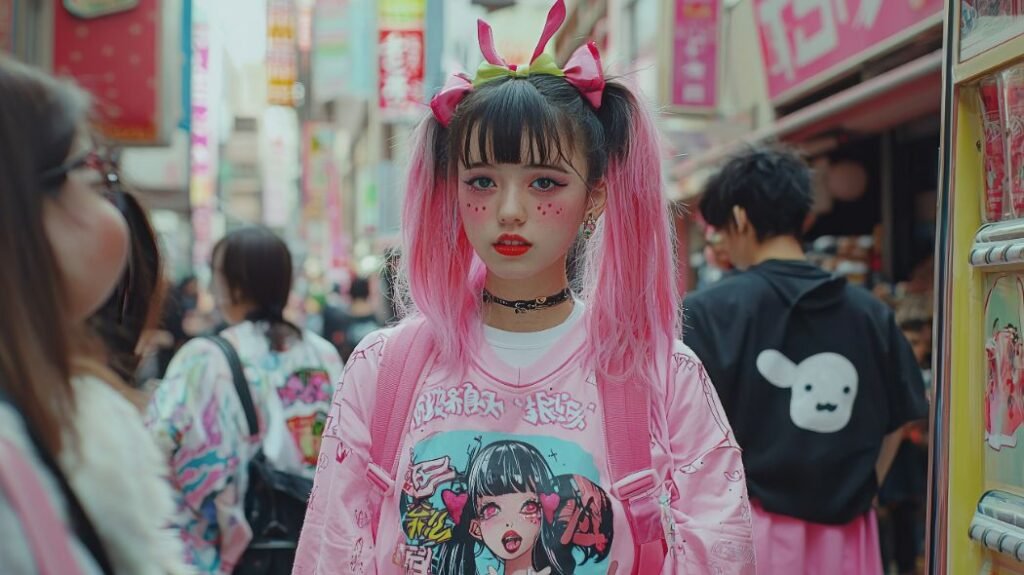
“Kawaii” translates to cute, and this look is all about big bows, pastel shades, and fun prints. It’s innocent and joyful, transforming everyday looks into surreal ones.
Gyaru
A rebellious look characterized by dramatic makeup, dyed or bleached hair, tanned skin, and glamorous attire. Gyaru subverts Japanese beauty ideals.
Visual Kei
Drawing inspiration from Japanese rock bands, Visual Kei incorporates the use of leather, lace, and outrageous hairstyles with a touch of androgyny. It’s fashion as performance art.
Fairy Kei
A pastel-rich look taking cues from 80s-90s toys, anime, and magical-girl nostalgia. Tulle skirts, vintage scores, and soft palettes characterize it.
Punk/Streetwear
A subversive substyle that interpolates deliberately ripped jeans, spiked jackets, sneakers, and graphic T-shirts with Harajuku’s off-kilter, whimsical vibe.
Who Are the Icons of Harajuku Fashion?
Kyary Pamyu Pamyu
Often called the Princess of Kawaii, Kyary is a J-pop star whose eccentric music videos and outfits showcased Harajuku’s whimsical side to the world.
FRUiTS Magazine Stars
Shoichi Aoki’s FRUiTS magazine made everyday Harajuku teens fashion icons, proving this style belonged to anyone daring enough to express themselves.
Sebastian Masuda & 6%DOKIDOKI
Sebastian Masuda, founder of 6%DOKIDOKI, is a pioneer of the “kawaii explosion” fashion movement, transforming Harajuku’s vibrant chaos into a global phenomenon.
Modern Influencers
TikTok and Instagram creators now spread Harajuku worldwide, remixing traditional styles with new digital-era fashion trends.
How Do You Dress in Harajuku Fashion?
Start with a Statement Base
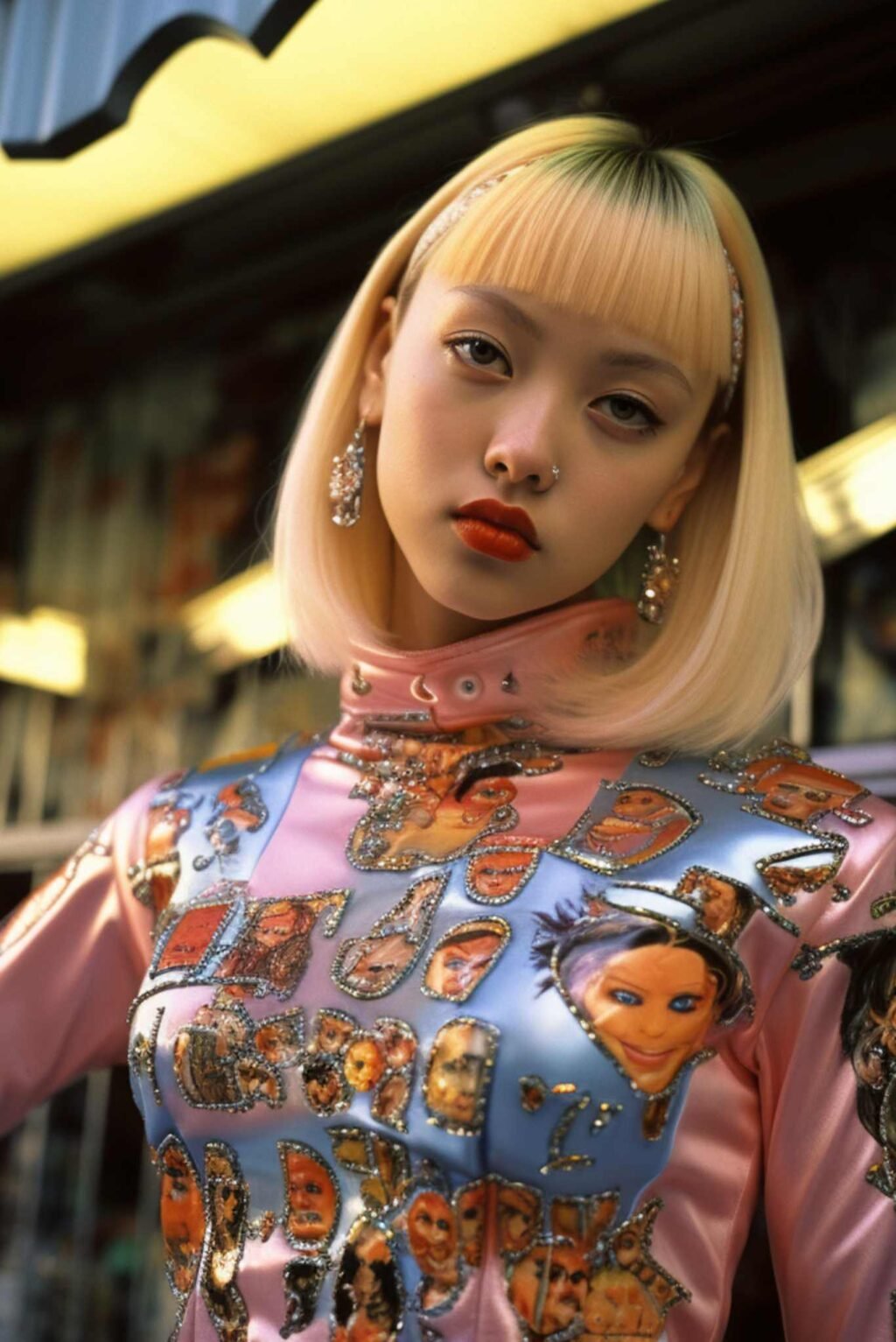
Start with a vastly interesting piece, such as a Lolita dress or an oversized hoodie or maybe even just a graphic skirt, to be your canvas.
Layer Boldly and Fearlessly
And then bringing in the prints, textures and clashing colors. Layer looks with skirts, dresses, jackets and accessories to generate visual interest.
Accessorize Without Limits
Hair clips, bows, stuffed animals, pins and jewelry are a must. The goal is maximalist fun.
Play With Makeup as Art
Kuya also loves the kinds of accessories and fashion that some consider outlandish, including obnoxious gal makeup bright eyeshadow, glitter eyeliner, bold lips or maybe stickers à la kawaii, with a reminder that when you’re dressing up, makeup is as much part of an outfit as anything else.
Express Yourself With DIY
Dress up your wardrobe with patches, painted shoes, or thrift store finds. Harajuku values individual expression more than it does perfection.
Dont Miss : Are Chains Acceptable Fashion in Japan?
How Has Harajuku Fashion Influenced the World?
Harajuku has influenced everything from K-pop idols and anime cosplay to Western runway shows. Thanks to Gwen Stefani’s “Harajuku Girls,” the style was introduced to U.S. pop culture; designers also draw inspiration from Lolita and Deco for their own avant-garde collections.
More than anything, Harajuku was a concept that spread the gospel that fashion is freedom and not rules. Its influence is evident in today’s streetwear, cosplay, and influencer culture of fashion.
FAQs
Yes, while less concentrated than in the 2000s, Harajuku is still thriving with Gen Z creators and evolving subcultures.
Cosplay imitates characters, while Harajuku creates original, self-expressive outfits.
Absolutely, Harajuku is about personality, not location. Many people worldwide have adopted it as daily wear.
Lolita, Decora, Kawaii, Gyaru, Visual Kei, and Fairy Kei remain the most recognized.
Conclusion
Harajuku fashion is more than clothes; it’s an art form and a rebellion against sameness. From Lolita elegance to Decora chaos, it proves that fashion is about storytelling, not conformity. Whether you’re in Tokyo or anywhere in the world, Harajuku invites you to express yourself boldly, unapologetically, and with joy.