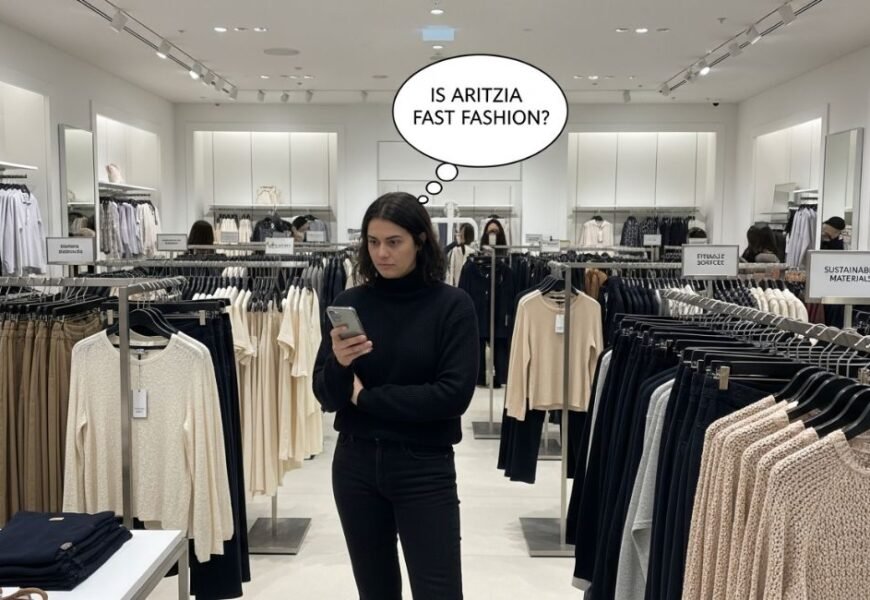
No, Aritzia isn’t traditional fast fashion but it isn’t completely slow or ethical fashion either. It sits in the middle, often referred to as “premium fast fashion” or “everyday luxury,” because it utilizes higher-quality fabrics, higher pricing, and in-house design, it still follows trends and releases new collections frequently.
Aritzia has captivated the attention of fans who appreciate minimalist, polished clothing that is more refined than what you’d find at most high-street brands. However, as more people become aware of sustainability and ethical shopping, the question remains: Is Aritzia really a fast fashion brand? The answer to this depends on what we mean by “fast fashion”: a quick design cycle, copycat trends, mass manufacture and low prices and low transparency about where and how our clothes are made. So, then, where does Aritzia really fit in the fashion world, that is? Let’s jump into the blog.
Key Takeaways
- Aritzia reported CAD $2.33 billion in revenue for 2024, with approximately 53% of sales originating from the U.S. market (Investor Relations, FY2024).
- Only 13% of U.S. consumers actively avoid fast fashion, indicating that most shoppers still prioritize style and affordability over ethical considerations (Statista, 2025).
- The global secondhand clothing market is projected to reach $350 billion by 2028, with Aritzia items, such as the Super Puff and Effortless Pants, reselling strongly on Depop and Poshmark (ThredUp via The Guardian, 2024).
- Academic studies show that most fashion brands’ environmental impact comes from Scope 3 emissions, manufacturing, raw materials and supply chains (Google Scholar – MDPI, ScienceDirect).
- The secondhand fashion economy is expanding rapidly, which may push brands like Aritzia to adopt resale or repair programs for sustainability (Vogue Business, 2024).
- The global fast fashion market is valued at over $120 billion and continues to grow despite sustainability concerns (Statista, 2023–2024).
What Defines Fast Fashion?
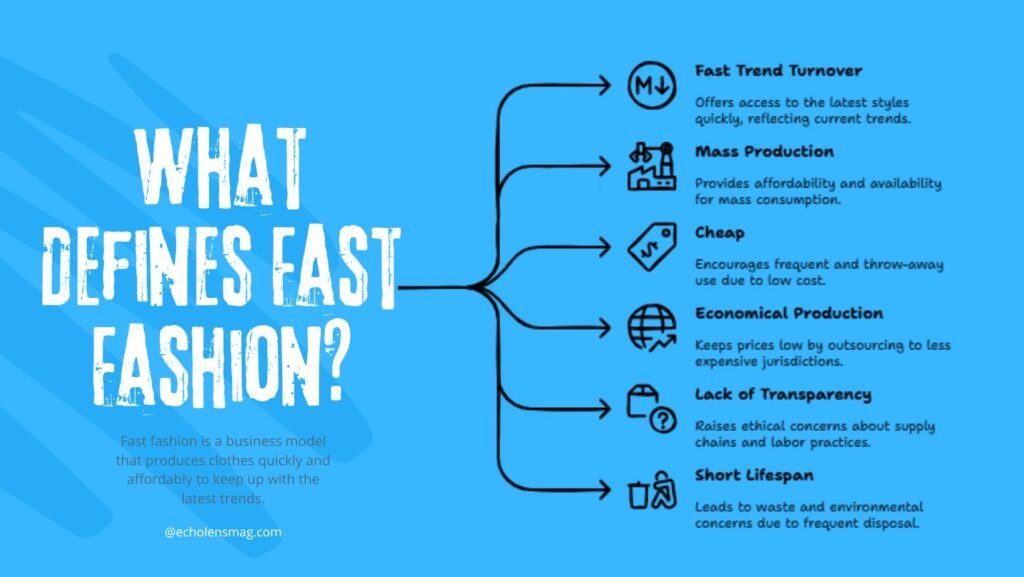
Fast fashion is a business model that produces clothes quickly and affordably to keep up with the latest trends. The likes of Zara, H&M and Shein are cases in point. They share common traits:
- Fast trend turnover: New styles are released weekly, sometimes daily, to reflect runway and TikTok trends.
- Mass production: The products produced are in huge numbers to cater to mass consumption.
- Cheap: Promote frequent and throw-away use.
- Economical production: Outsourced to less expensive jurisdictions to help keep the price in stores low.
- Lack of transparency: Supply chains are opaque, and data on wages, audits and sourcing isn’t clear.
- Short lifespan: Like fast food, fast fashion products are often cheap after a few wears, and you toss the item.
Where Aritzia Fits in the Fashion Industry?
Not Fast Fashion, Not Luxury
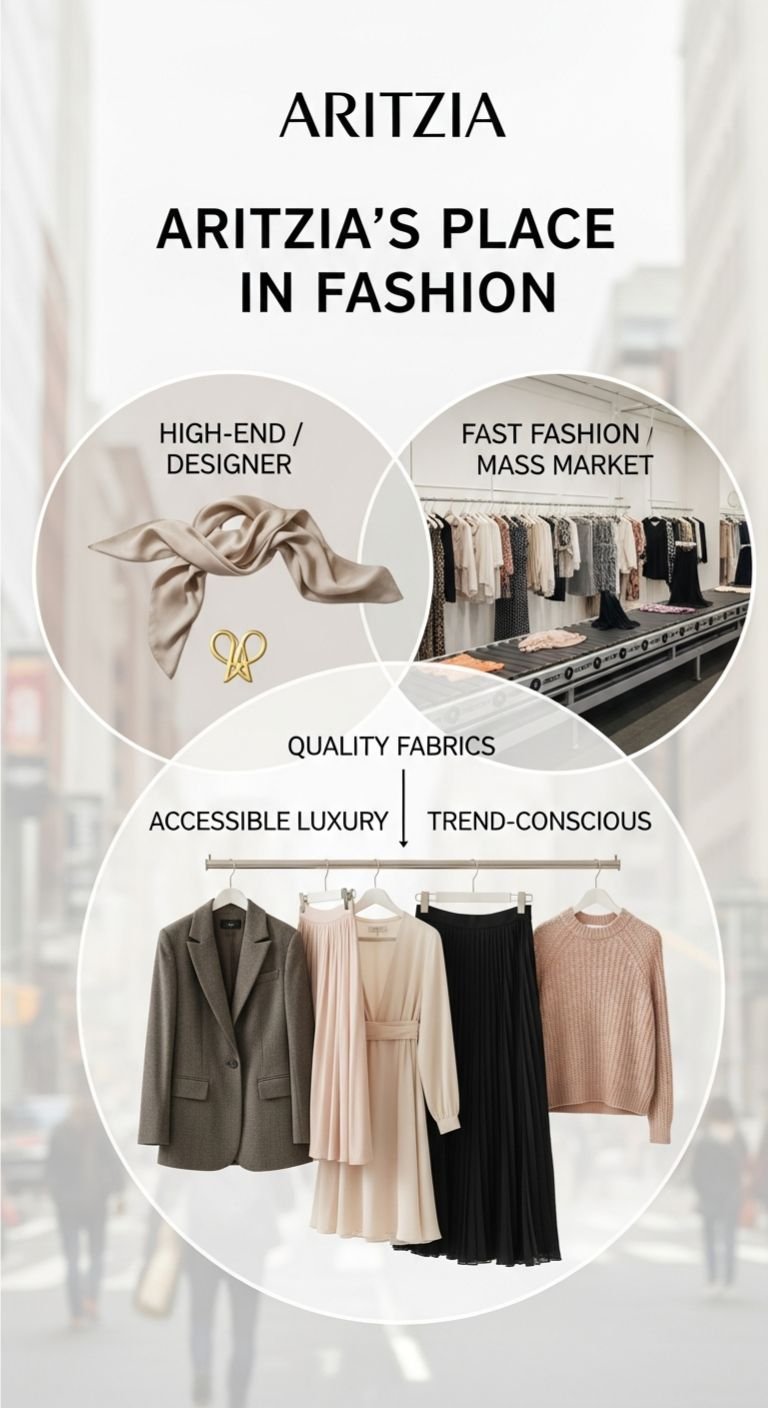
Aritzia does not bill itself as fast fashion. It’s all about “everyday luxury,” or trend-right pieces elevated by superior fabrics and more attention to detail than high-street alternatives.
Strong In-House Brand Mix
The majority of merchandise is from Aritzia’s own labels, Wilfred, Babatonand TNA, allowing the company far greater control over aesthetic, fit and quality.
Trend-Savvy, But Not as Fast as Ultra-Fast Players
Aritzia launches seasonal collections and releases drops, but it doesn’t churn out styles at the breakneck speed of a Shein or Zara.
The Middle Ground
Pricier than classic fast Harajuku Fashion, but with more rapid trend updates than luxury, Aritzia falls within the category of “premium high street/affordable luxury.”
Does Aritzia Meet Fast-Fashion Criteria?
Aritzia isn’t a fast-fashion brand, but it does incorporate some elements. It offers a steady stream of new styles to keep you feeling fresh, and the pricing suggests that better fabrics and construction are at work. Customer reviews vary: Many report that clothing still holds up after being worn for years, but some also note pilling or stretching of certain items. Net-net, Aritzia rests in a luxury-meets-disposable fashion sweet spot rather than either extreme.
Production, Ethics and Transparency
- Aritzia manufactures across multiple countries but doesn’t publish a comprehensive list of its factories.
- It releases Impact/ESG reports outlining sustainability goals and social practices, primarily covering in-house labels.
- Commitments cited include responsible materials, fair-labor standards and emissions reduction.
- Critics argue gaps remain around supplier wages, third-party audit disclosure and factory conditions.
Aritzia Bestsellers & Why They Matter
The Super Puff Jacket
The Super Puff is one of Aritzia’s best-known products, prized for its warmth, durability, and professional look. Unlike fast fashion outerwear, it’s carried through multiple seasons and retains great resale value on platforms like Depop and Poshmark. Its success is proof that Aritzia creates items you want in your wardrobe for the long haul, not just cheap, seasonal throws.
Effortless Pants & Agency Pants
These pants are workhorses for students, office workers and minimalists thanks to their timeless, tailored look. Instead of looking trendy, they appear season after season in fresh fabrics and colors. Their enduring appeal is evidence that Aritzia invests in durable “signature pieces,” which few fast-fashion brands have done.
Babaton Sculpt Knit Tops
Sculpt Knit is known for its figure-skimming fit, quality stretch fabrication ,and sculpted look. When cared for properly, these tops can last for years, pushing back against the notion that Aritzia makes clothes to be worn only a handful of times. However, they can also stretch out or pill if not washed and/or stored properly, hence the emphasis on proper garment care for longevity.
The Wilfred Effortless Dress & Satin Slip Styles
These dresses often go viral on TikTok and are well-liked in part for their sophisticated, minimalist silhouettes. They are often worn for special occasions, but are versatile enough for daily wear. Their popularity is proof that Aritzia isn’t all basics; in fact, it helps shape trend culture at the wearable and refined level.
TNA Cozy Fleece & Loungewear
Soft fabrics, thick fleece and a relaxed fit are the calling cards of Aritzia’s TNA Cozy collection. Unlike cheap, fast-fashion hoodies, these ones do not lose shape or color in any significant way after a good number of washes if you treat them right. The loungewear line allows Aritzia to compete in the same space as brands like Lululemon, underscoring its “comfort meets quality” image.
Pros & Cons at a Glance
| Pros | Cons |
|---|---|
| Elevated Basics & Timeless Style Aritzia offers minimalist, well-tailored clothing that stays in style. Many pieces are designed as wardrobe classics rather than short-lived trends. | Limited Transparency While Aritzia publishes sustainability reports, it doesn’t fully disclose factory locations, labor conditions, supplier wages, or third-party audit details. |
| Better Quality Cloth than Fast Fashion Compared to brands like H&M or Zara, Aritzia uses higher-quality materials like wool, linen, and TENCEL—making clothes look more premium and durable. | Higher Prices Than Fast Fashion Aritzia is cheaper than luxury labels but more expensive than Zara or Mango, making it less affordable for many shoppers. |
| Strong Design Consistency Its in-house labels (Wilfred, Babaton, TNA) have a consistent fit and aesthetic, building loyalty with returning customers. Popular items like the Super Puff and Effortless Pants remain favorites. | Some Quality Inconsistency Despite overall good quality, some customers report pilling, stretching, or loose stitching—especially in knitwear and basics. |
| Good Resale Value Well-known items like puffer jackets, pants, and dresses have strong resale demand on Depop and Poshmark, reducing waste. | Trend-Focused, Not Slow Fashion Although slower than ultra-fast brands, Aritzia still follows seasonal trends and frequent drops, so it’s not a true slow-fashion brand. |
Is Aritzia Worth the Price?
Quality vs. Cost
Aritzia is frequently lauded for its use of better fabrics, cleaner construction and more resilient tailoring than the fast fashion stars. However, some shoppers believe that certain items, particularly basic knits or thinner fabrics, often fail to meet the price tag, leading to mixed opinions on value.
Fit, Style and Aesthetic Appeal
Aritzia’s other main strength is its fit. Garment like the Effortless Pants, Super Puff and Babaton blazers are beloved for their flattering lines and minimal yet polished aesthetic. Some items follow fast-moving trends, which may not always make them feel timeless to those of us who have been shopping in the same time frame.
Wear Per Dollar and Resale Value
For Aritzia-swillers who regularly wear these foundational basics, the price per wear is low over time and the cost can be justified. Popular pieces also resell well on sites like Depop or Poshmark, which contributes to their value.
Future Outlook: Where Is Aritzia Heading?
Aritzia has been growing rapidly, especially in the U.S., and plans to expand into new territories, including men’s wear. But growth brings greater responsibility. In order to maintain this reputation, the brand will likely have to provide more information about where its clothes are made, how workers are treated and how it plans to reduce its climate impact.
In the years ahead, people will expect Aritzia to confirm its sustainability claims with actual data like factory transparency, carbon emissions and material sourcing. And it may take better roads to the future: into “less worst” fabric use and published, verified audits, even resale or repair. If Aritzia follows through with these changes, it may get a little closer to being an ethical, future-ready fashion brand.
Final Verdict
Aritzia isn’t true fast fashion, but it’s not fully ethical or sustainable either. It sits in the middle, offering better quality and longer-lasting options than fast fashion, but still remains trend-driven with limited transparency. If you want fully sustainable fashion, it falls short. If you’re looking for a step up from fast fashion, Aritzia is the perfect fit.
FAQs
It issues Impact/ESG reports and sets goals, but transparency on the factory list and granular audit data is still lacking.
Somewhat. Progress on materials and emissions reporting is being made, but not at the pace of some leading sustainable brands.
In multiple countries. The brand has not published a comprehensive list of suppliers; disclosures primarily focus on in-house labels.
Prices are higher because fabrics are better, designs are more structured and design control is tighter; retailing is improved.
No, not luxury, but premium high street/affordable luxury.
There is no publicly available list of factories to verify against all suppliers. Check for third-party audit disclosures and worker wage information in future reports.